

Employee Motivation May Not Be Your Real Problem
Before You Try to Motivate Your Team, Look at What’s Draining It
If you’re trying to solve an employee motivation problem and nothing seems to stick, the real issue may be something you can’t yet see.
When employee motivation starts to decline, leaders naturally look at the people. But capable employees can care deeply about their work and still struggle to perform when the environment around them continually drains their energy. Before asking how to motivate people, leaders should ask a different question: What is making it harder than it should be for our people to do great work?
When performance starts slipping, initiative declines, or people seem less engaged, one of the first assumptions leaders make is that employees need more motivation. But motivation and energy are not the same thing.
People can be highly motivated and still be exhausted by unclear priorities, frustrated by unnecessary friction, worn down by unresolved conflict, or overloaded by constant urgency. They may want to do great work but spend so much energy navigating the environment around the work that they have less capacity left to actually do it.
That isn’t necessarily an employee motivation problem. It may be an organizational energy problem.
Employee Motivation Can’t Overcome an Environment That Drains Energy
Think about the employee who joined your organization excited, capable, and ready to contribute. Six months later, that same person appears less engaged. They speak up less. They stop volunteering for things. They seem slower to make decisions or take initiative.
It is easy to conclude that something changed in the employee. Sometimes it did. But leaders also need to examine what changed around the employee.
Perhaps priorities shift every week. Decisions get revisited. Meetings multiply. Expectations vary depending on who is asking. A conflict between two leaders remains unresolved, forcing everyone else to navigate around it. People are held accountable inconsistently, so high performers quietly pick up the slack. None of these issues alone may look particularly alarming. Together, they create energy leaks.
Over time, those leaks affect team energy, and eventually they begin showing up in the metrics leaders are already watching: slower execution, weaker collaboration, declining team engagement, missed commitments, turnover, and inconsistent performance.

Your Leadership Is Part of the Energy Equation
One of the biggest blind spots leaders can have is underestimating how much their own behavior influences workplace energy.
A leader who constantly changes direction may believe they are being responsive. The team may experience it as confusion.
A leader who jumps into every decision may believe they are being helpful. The team may experience it as micromanagement.
A leader who labels everything urgent may believe they are creating momentum. Eventually, the team stops knowing what actually matters.
This is why motivation in the workplace cannot be treated solely as an employee responsibility. Leaders create many of the conditions in which people are being asked to perform.
That influence is significant. Gallup’s research has repeatedly found that managers account for 70% of the variance in team-level engagement. The same research connects highly engaged teams with stronger productivity and profitability.
Leadership behaviors can drain energy, but they can also restore it. Clear priorities reduce mental noise. Consistent expectations make accountability easier. Trust reduces the need for constant oversight. Effective communication prevents people from wasting time filling in gaps. Autonomy creates ownership. Alignment allows people to direct their energy toward execution rather than organizational friction.
That is one reason CareerFrame’s leadership development programs focus on the connection between leadership, communication, alignment, and performance.
Look for the Energy Leaks Before They Become Performance Problems
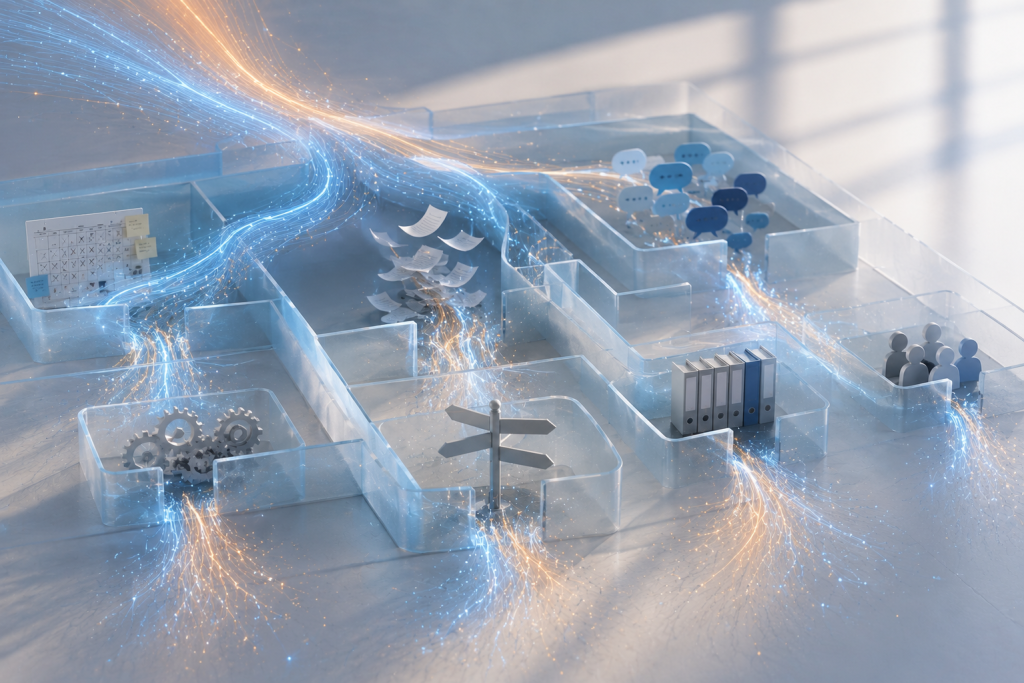
Energy problems rarely announce themselves as energy problems. They look like the employee who has stopped contributing ideas. The team that needs three meetings to make one decision. The high performer who quietly takes on more because holding someone else accountable feels harder. The leader who keeps stepping in because execution isn’t happening fast enough. These are signals worth paying attention to.
Instead of immediately asking, “How do we improve staff motivation?”, leaders can ask better diagnostic questions:
- Where are our people spending unnecessary energy?
- What repeatedly creates confusion, frustration, or rework?
- Are priorities and expectations actually clear?
- Where are we tolerating friction because we have learned to work around it?
- What leadership behaviors might be contributing to the problem?
Those questions shift the conversation from trying to change people’s attitudes to understanding the conditions influencing their performance. This is also where leaders can struggle to diagnose the issue themselves. When you operate inside a system every day, its patterns begin to feel normal. You adapt to the extra meetings, unclear ownership, recurring conflict, or constant urgency without realizing how much energy they consume. Sometimes you need someone outside the system to help you see what you can’t see.
High-Performing Teams Protect the Energy Required to Perform
Paying attention to workplace energy doesn’t mean lowering expectations. It means creating conditions that allow people to meet high expectations without wasting their capacity on avoidable friction.
That requires clarity, trust, meaningful accountability, communication, alignment, and leaders who understand the impact they have on the people around them. CareerFrame’s team workshops are designed to help teams strengthen many of these dynamics because sustainable performance depends on more than whether people are willing to work hard. It depends on whether the organization enables them to direct that effort where it matters most.
If you’re trying to solve an employee motivation problem and nothing seems to stick, the real issue may be something you can’t yet see. CareerFrame’s leadership workshops and strategic support help leaders uncover the hidden patterns, leadership behaviors, and organizational friction affecting team engagement and performance. Contact CareerFrame to identify the energy drains affecting your team before they become bigger and more expensive performance problems.